
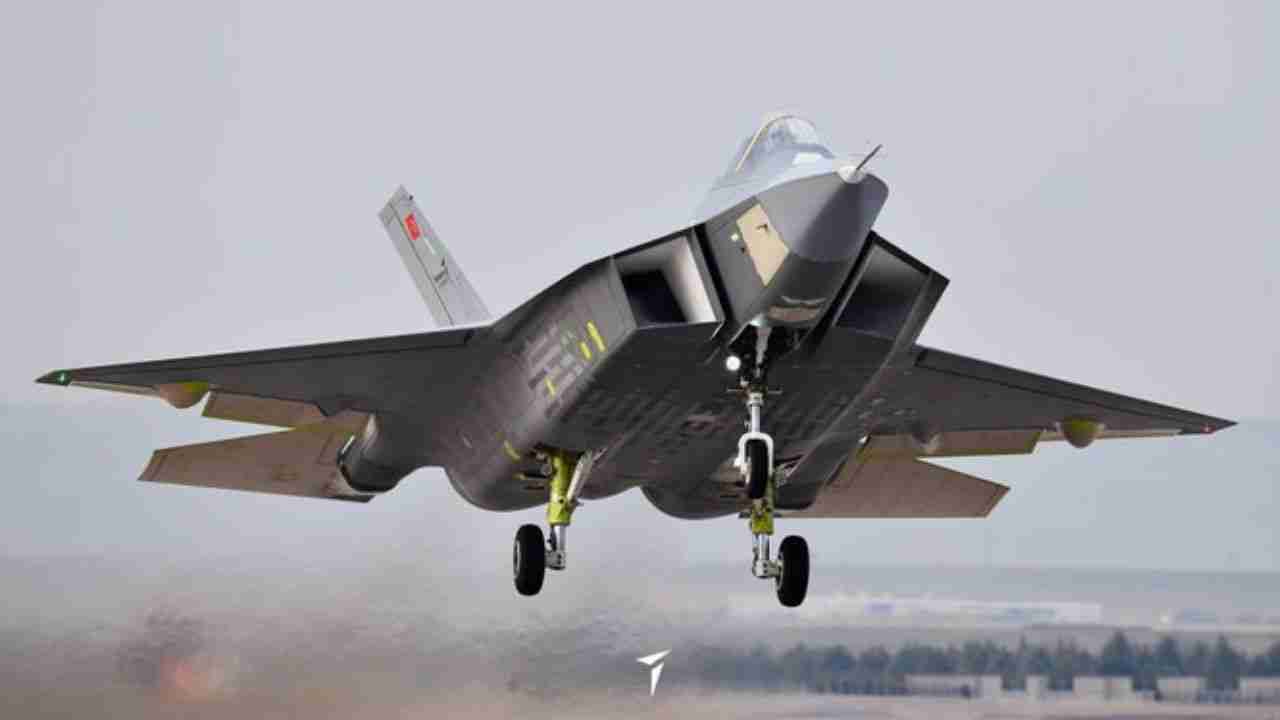
Indonesia has made the purchase of the Turkish fifth-generation fighter KAAN conditional on the complete absence of components subject to United States export regulations, known as ITAR.
The requirement, revealed by the Cavok portal, reflects Jakarta’s concern about avoiding any political dependency or future operational restrictions in the use of its military assets.
ITAR regulates the export of defense technologies and equipment of U.S. origin, even when incorporated into systems developed by other countries. In practice, this can require purchasing nations to seek authorization from Washington to sell, modify, or modernize such equipment — a scenario viewed by many governments as a strategic risk.
Indonesia’s caution is based on previous experiences with such limitations. In 2025, Turkey and Indonesia signed a framework agreement worth around US$ 15 billion, paving the way for a potential acquisition of the KAAN, including local production, industrial cooperation, and large-scale technology transfer.
According to Turkish Aerospace Industries CEO Mehmet Demiroglu, the sales process will take place in three phases, with the first already formalized and the remaining stages scheduled for 2026. As negotiations move forward, the program timeline and the development of Turkey’s indigenous engine remain key factors. Even so, Indonesia has signaled that it is willing to wait for a fully ITAR-free version in order to finalize the deal.
Source: Militarnyi | Photo: X @TUSAS_TR | This content was created with the help of AI and reviewed by the editorial team
🇹🇷🤝🇮🇩
The framework agreement for the export of Türkiye’s KAAN National Combat Aircraft to Indonesia has been valued at 15 billion US dollars.Speaking on the matter, TUSAŞ CEO Mehmet Demiroğlu stated that the KAAN fighter jet sale to Indonesia will be structured in three… pic.twitter.com/1qXF6LBdCb
— International Defence Analysis (@Defence_IDA) January 24, 2026
